
Heidelberg University of Education stands for high-quality, interdisciplinary and internationally networked educational research. Our core expertise lies in the investigation of educational, teaching and learning processes: Under what conditions does future-oriented and inclusive education succeed? How do we prepare teachers and other education experts for the challenges of the future?
The PHHD is shaping the education of tomorrow, research-based and practice-orientated. It also contributes to answering relevant social questions, with a particular focus on education for sustainable development (ESD), diversity and inclusion, democracy and media education as well as STEM education.

The PHHD is a university with a university profile with traditional doctoral and habilitation rights. We also see ourselves as a centre of excellence and driving force for educational research and development in the Rhine-Neckar metropolitan region. Our research profile is characterised by its wide range of educational science topics and numerous international collaborations.

We dedicate our research to central social challenges in the field of education. Our focus is on educational research across the entire lifespan, inclusion and heterogeneity, language education and the digital transformation of teaching and learning processes. We also focus intensively on questions of professionalisation in education and interdisciplinary approaches to sustainable development.


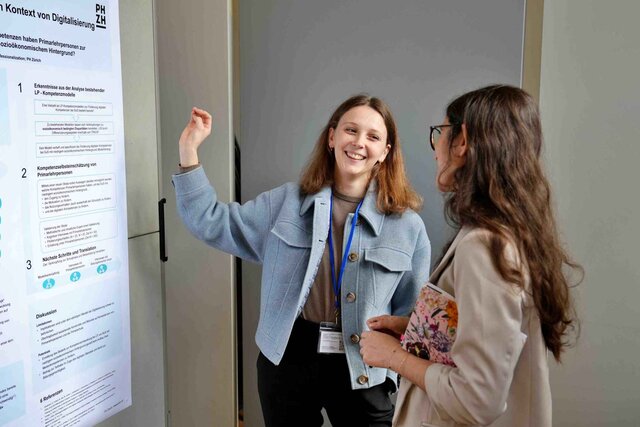
Doing a doctorate at the Heidelberg University of Education is characterised in particular by practical research with social and educational policy relevance and methodological (innovative) diversity. The University of Education is a place where academic work is located in the centre of everyday educational life and provides concrete benefits. Supervisors encourage a research-based attitude, active participation in teaching and projects and support the early development of an academic profile and networking.
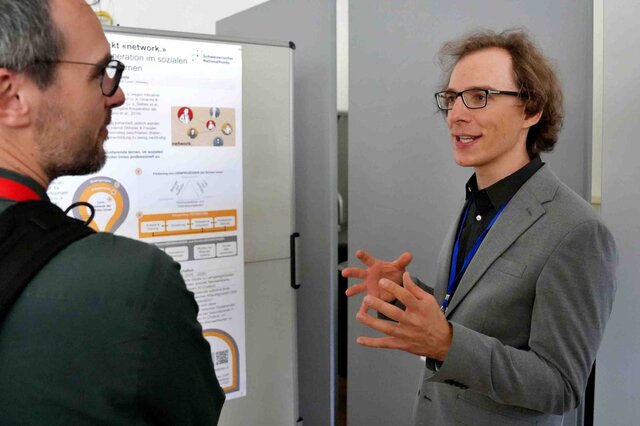
A habilitation at Heidelberg University of Education offers special opportunities - especially for academics who want to work both with a strong research focus and a practical orientation. Postdoctoral researchers have the opportunity to position their research in a clearly defined and socially relevant field and to distinguish themselves as experts in educational issues. Their academic work is not only convincing on a theoretical level, but also has a concrete impact on educational practice and policy. The habilitation thus becomes a meaningful step with diverse career prospects - in science, teaching, transfer and social organisation.