The Study and Examination Regulations (StPO) regulate the framework conditions of your Bachelor's degree programme in Early Childhood and Elementary Education. They include study objectives, admission requirements and information on the scope and course of the programme.
The module handbook (MHB) covers all modules of your degree programme.
You will find information, for example, on module content and scope, learning objectives and skills, associated courses and examinations as well as organisational matters (e.g. module type, duration, frequency of courses, contact persons).
Click here for the module coordinators.
The course timetable is issued for each semester and serves as an overview of the courses you will attend in the respective semester in the Bachelor's degree programme in Early Childhood and Elementary Education.
You can find a complete overview of the courses at the PH Heidelberg in the
Course Catalogue (LSF)
The study and examination regulations (StPO) contain all information on the necessary examinations, including the final examination and examination procedures.
The dates of the module examinations (MoP) can be found in the overview of the current semester.
The Academic Examinations Office has all the information you need about organising, registering for and taking examinations, as well as support options.
You can download a current certificate of achievement from the CAMPUS portal. It shows you all the modules you have completed, credit points earned (ECTS) and grades. You can also manage your exam registrations via the CAMPUS portal and Stud.IP.
To the CAMPUS portal To Stud.IP
To view module examinations, please note the regulations in your examination regulations. As a rule, examinations can be inspected within a certain period (1-2 months) after the examination results have been announced. You register with an application by e-mail via your PH e-mail address.
The close link between theory and practice is a key feature of the degree programme. Learning content is translated into concrete early and elementary education activities with children of the relevant age groups in the practical placements. Educational programmes, support measures and diagnostic activities are tested, practised and documented.
On the one hand, the students are accompanied, guided and supervised by mentors from the centres. On the other hand, the internships are linked to courses in which work assignments are given for the internships, the results of which flow back into the courses.
The forms for the organisation of internships (registration form, cooperation agreements, verification forms, declaration of consent etc.) can be found on Stud.IP in the course:
"Internship: PRAX | Internship organisation"
To Stud.IP
The internship can also be completed abroad. The International Office (AAA) offers funding opportunities.
To the International Office
You can register your final thesis for the Bachelor's degree in Early Childhood and Elementary Education as soon as you have earned 120 ECTS credits. Two examiners must be appointed. Further information on the framework conditions for your thesis can be found in the Study and Examination Regulations (StPO).
Submit the application for admission to the thesis directly to the Examination Office by e-mail to
If you have any questions after submitting your application, please contact the Examinations Office directly. The Academic Examinations Office can provide you with organisational information about the thesis.
Please addressany questions regarding content to your examiners.
Once you have successfully passed your final examination, you can apply to the Academic Examination Office for your graduation documents:
- Degree certificate
- Certificate of your academic degree
- final transcript of records (Transcript of Records)
Information on the final documents
If you are de-registered after completing your degree programme, you will be provided with certificates of your period of study via the CAMPUS portal:
- Notice of de-registration (shows the reason for and effective date of de-registration)
- Certificate of de-registration (shows your degree programme and periods of study)
- Certificate of study periods for submission to the German Pension Insurance (according to form V0510 DRV)
Information on de-registration
After successfully completing the Bachelor's degree programme, you will become a "state-recognised childhood educator". Childhood educators work in institutions that provide education and support for children from birth to around ten years of age, e.g. in daycare centres, educational centres or family centres. They can also work in early intervention and in social-paediatric centres, as well as in child and youth welfare offices and daycare centres. Childhood educators are qualified for managerial positions.
To the alumni network
Would you like to gain further qualifications and deepen your knowledge after completing your Bachelor's degree? Then you can seamlessly continue with a suitable Master's programme.
The M.A. in Educational Sciences at the Heidelberg University of Teacher Education offers a specialisation in educational processes in early childhood and in the elementary sector. Graduates go on to work in project management, leadership and management positions at educational institutions. The Master's degree also qualifies you for a doctorate and thus for entry into science and research.
If you wish to continue on to the Master's programme immediately after your Bachelor's degree, please note the deadlines for registering and completing your thesis.
Information from the Academic Examinations Office on the transition from Bachelor's to Master's programme
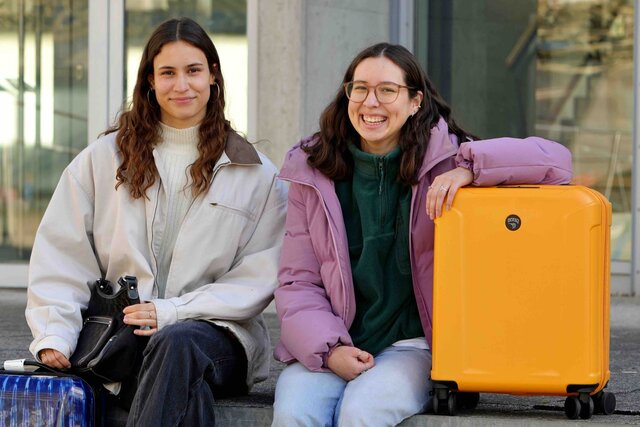
A semester abroad is a great opportunity to broaden your professional horizons, make new contacts and immerse yourself in a new culture at the same time. Would you like to complete your internship abroad or spend a semester studying in another country? We will be happy to support you!
To the International Office
Have you completed your degree or are you about to graduate and would like to put out feelers? We collect suitable vacancies for non-teaching degree programmes to help you start your career. There are also many jobs for student assistants at the PH HD during your studies.
To the job market
[Link: To the student assistant job market]