We see ourselves as a centre of excellence and a driving force for research and development in educational sciences within the Rhine-Neckar metropolitan region, and our work is characterised by five key research areas. Our research is characterised by interdisciplinary diversity across educational topics, as well as by a nationally and internationally recognised focus within the field of educational sciences. Our focus lies on Education for Sustainable Development (ESD), diversity and inclusion, democracy and media education, and STEM education.
We place a strong emphasis on teacher training, as well as on the development of teaching and schools. Above all, trainee teachers should be equipped with the necessary subject-specific and pedagogical skills, as well as the relevant practical competencies, to meet the challenges of modern school life. To this end, our research and development team devises innovative teaching concepts that take pupils’ individual learning needs into account and help to further develop school culture. A particular focus is placed on promoting digital and participatory approaches within the school context.
We see ourselves as a driving force in promoting Education for Sustainable Development (ESD) and systematically linking it to sustainable development processes within the context of the Sustainable Development Goals (SDGs). To this end, we research and develop teaching, learning and professional development concepts that empower future teachers and other key influencers in the education sector to initiate and shape sustainable solutions to the societal challenges of the future. In this regard, the PHHD is part of regional, national and international research and development networks and brings together disciplinary and transdisciplinary perspectives across the university to provide impetus for a just, resilient and liveable future.
At our university, we place particular emphasis on developing approaches that recognise the diversity of learners and integrate it into teaching, in order to cater for all students. We are investigating how inclusive educational practices can be designed to address individual needs and promote social justice as well as equal opportunities. We also research strategies that support teachers in understanding diversity as an asset and in designing inclusive teaching practices that are sustainable. The aim is to foster an inclusive educational culture that breaks down barriers and provides equal educational opportunities for all learners, regardless of their background, disability or social status.
STEM education (science, technology, engineering and mathematics) is given particular support at the PHHD. Our interdisciplinary approach encompasses both subject-specific and pedagogical perspectives. Research and development in the field of science education designs and implements innovative teaching methods that promote an understanding of the natural sciences and encourage pupils to think critically and creatively. Particular emphasis is placed on integrating practical experiments and the use of digital media to spark an interest in STEM subjects and make them more accessible to all learners.
Democracy and media literacy are becoming increasingly important cross-cutting themes – particularly for trainee teachers. To promote media literacy, our university develops and evaluates appropriate teaching and learning concepts and introduces them into the curriculum for all trainee teachers, in order to prepare them for the use of digital media in the classroom. We also recognise our special responsibility in the field of political education, within the context of the discourse on democracy education, as a contribution to the training of future teachers, and to this end we are establishing research-based teaching and professional development programmes.
Prevention and health promotion: Healthy university teaching, promoting physical activity & reducing sedentary time, local health promotion
Communication: In the special educational needs specialism ‘Language and Communication’, students receive specialist training to work with pupils with language and communication needs.
The Guidelines on Good Academic Practice at Heidelberg University of Education are designed to ensure quality, transparency and integrity in research and teaching. They set out binding standards that make academic work transparent and verifiable. At the same time, they promote responsible collaboration and the fair treatment of intellectual property. These principles apply to all members of the University and form the basis for a trustworthy academic environment.
Key points of the guidelines:
- Documentation and traceability of research results
- Responsible handling of data and sources
- Promotion of fair and respectful collaboration in research
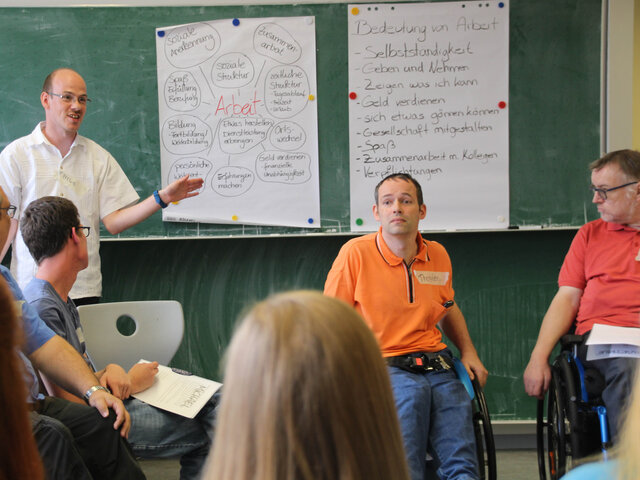
Inclusive skills are specifically taught through interdisciplinary degree programmes, specialised further training courses and close collaboration with schools. In addition, Heidelberg University of Education is involved in numerous projects aimed at developing and implementing inclusive teaching approaches. Through the Annelie Wellensiek Centre for Inclusive Education (AW-ZIB), the University operates a facility that is unique in Germany, which not only involves people with cognitive impairments in teaching and research, but also employs them as educational professionals in roles subject to social security contributions.
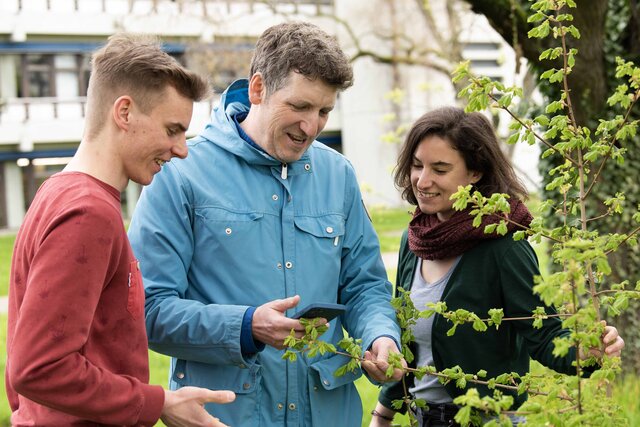
Education for Sustainable Development (ESD) is regarded as a key factor in shaping global economic progress in harmony with social justice and within the limits of the Earth system’s ecological carrying capacity. At Heidelberg University of Education, Education for Sustainable Development is a guiding principle in teaching, research and knowledge transfer, and is already being implemented through activities across various disciplines and institutions.