We’re delighted that you’ve found your way to us. The alumni programme allows you to stay in touch with the university and your fellow students even after you’ve finished your studies. Through the alumni programme, you can continue to play an active role in the university community by sharing your knowledge and experience; you’ll also benefit from networking and further learning opportunities, and gain insights into innovative educational research.
- A lifelong network. Get in touch with your former fellow students and lecturers at our alumni meetings.
- A window into the university. Stay up to date with what’s happening at Heidelberg University of Education.
- Innovative educational research. Follow the latest discussions on education, including through continuing professional development courses and free events.
After completing your degree, you’ll go on to work as teachers, researchers or educationalists, amongst other roles, and enrich the educational landscape of the future with your expertise. Through the alumni programme, the University aims to stay in touch with you and foster a vibrant exchange.

Degree programme: M.Ed. in Special Educational Needs / Learning / GENT / Sport
Year of graduation: 2024
What did you do after graduating? What are you doing now?
I stayed at the PH and work there as a research assistant in the Department of Sport.
What was your favourite place at Heidelberg University of Education?
The sports grounds: sports halls, the stadium, beach courts, the indoor swimming pool, tennis courts …
What do you like to look back on?
I particularly think of the many great experiences I had with my friends and fellow students. During my time at the PH, I formed genuine friendships that have lasted well beyond my studies.
I also think about the constant influx of new knowledge, which I perhaps only truly appreciate in hindsight. I find the combination of theory and practice particularly enriching.
What advice would you give to students?
Enjoy your studies, soak up as much as you can and make the most of it!
Is there anything else you’d like to share?
There’s no shame in taking longer than the standard duration to complete your degree. Studying is fun. Make the most of your time at the PH and enjoy the many opportunities that studying here offers.
Thank you, dear PH, for a wonderful time at university!
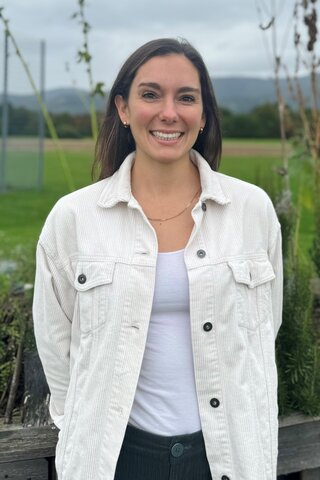
Course: Teacher Training in Special Educational Needs / Art
Year of graduation: 2022
Instagram:
What did you do after graduating? What are you doing now?
After completing our studies in Heidelberg, we headed straight to Switzerland – where we went on to complete a Bachelor’s degree in Fine Art at the Lucerne University of Applied Sciences and Arts. We worked and thought together more and more intensively as a duo and began to establish our identity.
What can art do?
Today, we work as artists and special needs teachers, with a practice that straddles disciplines.
This is evident both in our practice-based projects, which sit at the thematic intersection of art and inclusion, and in our talks at conferences or in our seminar ‘Art and Inclusion’, which we run as part of our teaching role at Heidelberg University of Education. In addition, we both work in schools and, in March 2025, founded the DELI studio at the Betriebswerk together with two friends.
What was your favourite place at the Heidelberg University of Education?
Definitely: the art studio and printmaking workshop at the new University of Education!
What do you like to look back on?
Long nights in the studio, summer parties in the garden in front of the art studios – which, sadly, no longer exists – and, of course, the art excursions to Civitella.
Your advice for students at Heidelberg University of Education:
Study for yourselves. Have the confidence to pursue your goals and act accordingly.
Is there anything else you’d like to share?
We’re incredibly grateful for the experiences we were able to have whilst studying in Heidelberg and Lucerne, and especially for the people who gave us a push, took us seriously and, ultimately, shaped us in so many different ways.
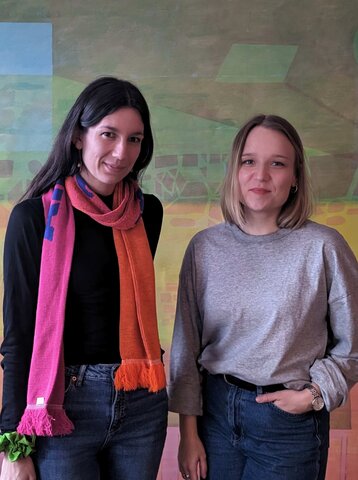
Course of study: Teacher training for secondary schools / Subjects: German, History, Catholic Religious Education
Year of graduation: 1989
What did you do after graduating? What do you do now?
After completing my teaching placement in Baden-Baden, I worked at various secondary schools in Baden-Württemberg – in Sindelfingen, Heilbronn, Schwaigern and finally in Obrigheim. I have now been working there for 20 years, in the town next to my hometown of Mosbach.
Since then, I have also been volunteering on the board of the Neckarelz Concentration Camp Memorial, where I am responsible for the educational programme. This allows me to combine my profession with my historical interest in the local reappraisal of Nazi history. An educational partnership between my school and the memorial site is the result of this collaboration. ‘Think globally, act locally’ – for me, this is also the guiding principle of successful remembrance work and a sound basis for political education in local schools.
I have been a member of the staff council at the Mannheim Education Authority for a good eight years. This greatly enriches my perspective on the school system, as it provides a valuable insight into the inner workings that one does not normally gain as a teacher at school. I am constantly surprised by how underdeveloped the trade union awareness is among many colleagues, particularly young ones.
What was your favourite place at Heidelberg University of Education?
I lived in the student hall of residence in Neuenheimer Feld. As I recall, there were more than 20 students on each floor, with shared bathroom facilities in the corridor and a communal kitchen for everyone. There was hardly any privacy there. The reading room in the university’s library at Neuenheimer Feld became a sort of ‘living room’ for me. Those were still the days of analogue media, after all. My day as a student would regularly begin there, reading the daily newspaper and having a coffee.
What do you like to look back on?
I come from a family that one might well label as ‘educationally disadvantaged’. I was the first to go to university. For me, the move to the PH was a huge step; it opened the door to a whole new world for me and broadened my horizons in ways I’d never imagined.
I enjoyed the discussions in the seminars with the other students. Visits to the theatre, excursions. The trip to the Auschwitz Memorial left a deep impression on me. At the time, I used it as an opportunity to find out about the deported Jews from my home town of Mosbach. My current involvement in memorial work has its roots there.
Even today, I sometimes stand in front of my bookshelf and take out books that I read during my time as a student at the PH. I actually still have some of them. Whenever I’ve moved house, I’ve never had the heart to get rid of them. I am amazed when I skim through the notes I made in them. You come face to face with yourself in them.
No, that’s not an exaggeration. My years of study at the PH opened up a whole new world to me. I would be a different person if I hadn’t studied there.
What advice would you give to students at the Heidelberg University of Education?
Not much, as I belong to a different generation. But this much I’ll say: be curious. Always be curious. About people, about things. And take pleasure – in thinking!
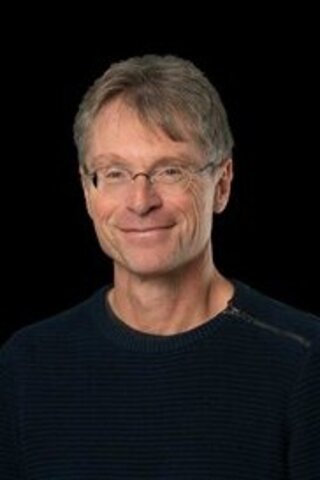
Degree programmes: B.A. in Prevention and Health Promotion, Heidelberg University of Education; M.A. in Prevention and Health Management, Saarbrücken University of Applied Sciences (2021)
Year of graduation: 2019
What did you do after graduating? What do you do now?
For the past five years, I have been working as a health promotion officer at the Hessian Association for Health Promotion (HAGE) in Frankfurt. I started out on a project promoting physical activity for older people at local authority level.
Together with local partners, the aim was to establish and expand low-threshold physical activity programmes and create activity-friendly environments within the urban space. The objective was to connect key stakeholders and thereby create synergies.
My work now focuses on the following areas:
co-ordinating a state-wide prevention programme to promote mental health and destigmatise mental illness; designing and organising specialist events and interdisciplinary committees; and conducting scientific evaluations of various projects.
What I particularly enjoy about my work is the variety of topics involved. No two days are the same – routine tasks are the exception. I also value the professional exchange with universities, including the Department of Prevention and Health Promotion at the University of Teacher Education: due to overlapping themes, there have already been several collaborations in the form of workshops or specialist presentations.
What do you look back on fondly?
I particularly remember practical assignments and my involvement in events that directly linked theory and practice. With a few exceptions – such as the Health Policy module – my degree programme was characterised by dynamic, practice-oriented content.
The interdisciplinary perspective on health is particularly beneficial to me today. This ‘broad perspective’ makes it easier for me to collaborate with stakeholders from different policy areas and walks of life. Health in All Policies (HiAP) is not an abstract concept, but something I encounter very concretely in my day-to-day work.
The programme also gave me a wide range of insights into various subject areas. I was able to set my own areas of focus and explore them in greater depth through a subsequent Master’s programme. Looking back, I can say that the degree programme equipped me with a wide-ranging toolkit – and I was able to put together the right tools for myself.
What advice would you give to students?
Make active use of your time at university to network – even outside the teacher training college environment.
Keep in touch with people – work placements or part-time student jobs can not only be eye-openers but also open doors.
My degree in three words:
diverse | networking | approachable
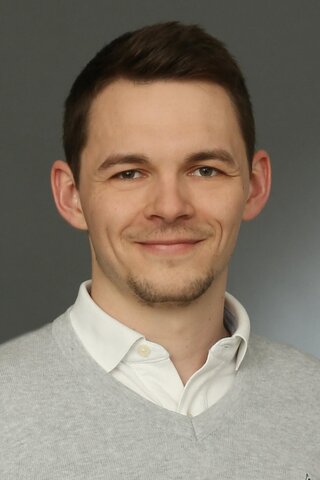
Degree programme: Teacher training for German and English at grammar schools; PhD thesis on ‘Depictions of anti-Semitism in the works of Jakob Wassermann’
Year of graduation: 2016
LinkedIn:
What did you do after graduating? What are you doing now?
After completing my degree, I made a conscious decision not to pursue a career in the school system. Instead, I devoted myself to academic research into “Images of Anti-Semitism in the Works of Jakob Wassermann” and completed my PhD in this field. Following my habilitation, I was appointed associate professor in the Department of German Language and Literature at the Faculty of Humanities and Social Sciences, Marmara University, where I have served as deputy head since 2025. I am currently engaged in intensive research in the field of inclusive philology, focusing in particular on questions of the representation and significance of disability in German-language literature.
What was your favourite place at Heidelberg University of Education?
As I had to battle a serious form of cancer (leukaemia) whilst studying, those places became particularly precious to me – places that did not constantly remind me of my suffering. Any environment where I could forget, for a moment, what was happening inside my body became a safe haven. The seminars were the most significant for me, as they felt like a gentle euphoria that lifted me out of the harshness of everyday life. There, I was able to immerse myself in thoughts, texts and conversations that, for a short while, took my mind off the illness and gave me the feeling that I was still part of a vibrant, searching and learning life.
What do you like to look back on?
When I think back on my student days, the first things that come to mind aren’t exam stress or sleepless nights, but rather the little moments that carried me through: conversations in the corridor, the feeling of truly understanding something for the first time, friendships forged in that same uncertainty, and that quiet realisation that you’re in the process of finding yourself. Despite all the difficulties, university remains one of the most formative and wonderful times of my life, because looking back, you realise just how much you’ve grown and how valuable those years full of searching, doubt and discovery were.
What advice would you give to students?
My advice to students at Heidelberg University of Education is to find their own rhythm and not to lose sight of themselves. Whilst university life is a succession of seminars, exams and obligations, it is also a place that takes up time – that time in which you grow, overcome uncertainties and seek your place in the world. That’s why I advise them to ask questions boldly, accept help, let others support them and, at the same time, trust in their own strength. Heidelberg University of Education offers many opportunities; what matters is that you follow paths that feel right and, in doing so, learn to believe in yourself.
Is there anything else you’d like to share?
Perhaps the only thing I’d really like to add is the hope that my story will give others courage. I’ve learnt that, despite illness, despite setbacks and despite all the detours, you can find your own place. Academia, literature and teaching became paths along which I not only explored subjects, but also myself. When I look back today, I don’t see a straight path, but one shaped by perseverance, chance encounters, people and moments. And that is exactly what I want to pass on to students: that it’s worth carrying on – even when each step feels like a struggle.
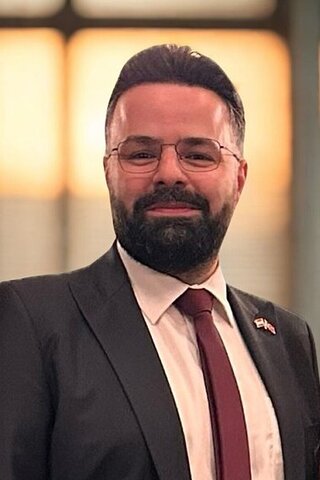
Degree programmes: BA in Prevention and Health Promotion (2021); MA in Community Health Promotion (2023)
Year of graduation: 2023
What did you do after graduating? What are you doing now?
Since December 2023, I have been working as a programme officer at the Hessian Working Group for Health Promotion (HAGE) in Frankfurt. There, I work as a specialist and networking officer for health promotion and climate change. My work involves, amongst other things, supporting local stakeholders in developing and implementing health-promoting strategies in the context of climate change and climate adaptation. This includes organising specialist events, providing consultancy and facilitating processes. I particularly enjoy being able to actively contribute to the promotion of sustainable structures in local authorities at the intersection of climate and health.
I was able to take up this post whilst I was still completing my Master’s degree, which enabled me to make a seamless transition into working life.
What do you like to look back on?
Looking back, my time studying at the PH was a very formative and enriching experience. Even during my Bachelor’s degree, I developed a strong interest in the ‘local authority’ setting, particularly in the question of how structural conditions influence health and how these can be shaped in collaboration with local people. The Master’s programme then gave me the opportunity to explore this interest in greater depth and examine the topic from various perspectives. I have particularly fond memories of seminars where we linked different topics and explored them further. The breadth of the subject matter and the peer discussions helped me to develop a sound overall understanding.
I was also able to gain important practical experience whilst still studying, both as a student assistant and through a compulsory work placement. All these experiences – in terms of both content and methodology – help me in my day-to-day professional life today: whether when planning workshops, communicating with local stakeholders, or developing strategic measures.
What advice would you give to students?
Start networking early: make the most of the wide range of opportunities during your studies to build contacts, both amongst yourselves and with external partners. Networks open doors.
Embrace a practical approach: work placements, part-time jobs, project work – all of these help you develop your own profile and ease the transition into your career.
Stay open-minded: Health promotion is a broad field. Those who remain flexible and are open to new perspectives will find their own path.
My degree in three words:
connected | meaningful | effective
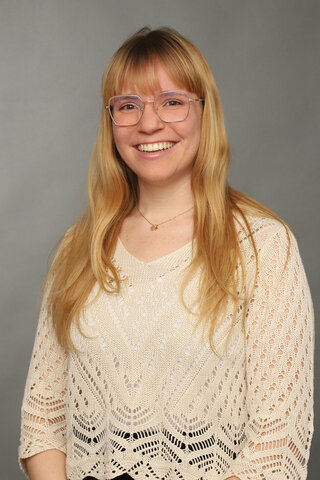
Degree programmes: BA in Prevention and Health Promotion, Heidelberg University of Education; MSc in Healthcare Research and Implementation Science, University of Heidelberg (2022)
Year of graduation: 2019
What did you do after graduating? What do you do now?
I work as a programme coordinator at teamw()rk for Health and Work at the Hessian Association for Health Promotion e.V.
My main focus is on actively involving the dialogue group of unemployed people in the process of designing and implementing health promotion activities, so as to empower them to take control of their own health. In this context, I greatly value the close collaboration and exchange with other stakeholders in the participating districts of Hesse. Together, we are working to develop and establish structures that promote health. These intensive partnerships and the promotion of interprofessional collaboration are key to achieving our goals.
What do you like to look back on?
I look back with gratitude on my time as a student, during which I not only learnt a great deal academically, but also gained a comprehensive insight into the various areas of prevention and health promotion.
One challenge was finding my bearings amidst the wide range of career opportunities and establishing a clear direction. My work in this context – initially as a student assistant and later on the EUBeKo research project – was particularly helpful, as it enabled me to put theoretical knowledge into practice at an early stage. I would like to express my special thanks to Jens Bucksch, Lisa Paulsen, Chiara Dold and Lea Benz for their trusting collaboration and the numerous
opportunities for professional and personal development.
What advice would you give to students?
My advice for your studies: Take advantage of practical opportunities early on to combine theory with practice – whether as a student assistant, on projects or during work placements. Build up a network and remain open to different career paths. Regularly reflect on your interests and career goals. Show initiative, get involved in activities beyond your studies and continue to develop your soft skills. Setbacks are part of the process – the important thing is to persevere and learn from them.
My degree course in three words:
formative | inspiring | supportive
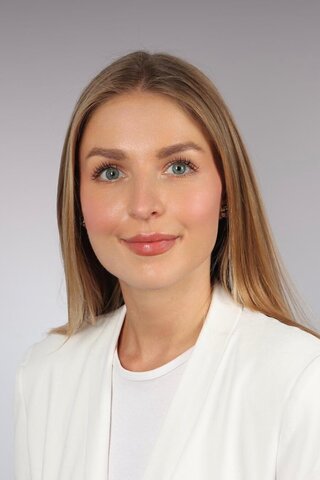
Degree programme: Primary Education (towards a primary school teaching qualification)
Year of graduation: 2017
What did you do after graduating? What are you doing now?
After completing my degree, I initially began my teaching practice for a primary school teaching qualification. During this time, it became increasingly clear to me that working in the field of school social work appealed to me even more. The decision to leave teaching behind was not an easy one for me. Looking back, however, I am very grateful to have taken what was, for me, a ‘bold’ step.
I then worked as a class teacher at a special educational needs centre (SBBZ). After that, I moved into social-educational family support whilst, at the same time, completing my Master’s degree in Social Work.
I’m currently working as a school social worker at a secondary school.
What was your favourite place at Heidelberg University of Education?
One of my particular favourite places was the old building, especially in connection with my further studies in drama and theatre education. I spent a lot of time in the multi-purpose hall, during performances both on stage and behind the scenes, for example acting or working on lighting. That time was full of fun, formative experiences and meaningful encounters. Friendships were formed there that still stay with me today, and it was an important part of my personal development.
I also really enjoyed working as a tutor for general studies in the Didactic Workshop. I always felt at home there and greatly appreciated the wide range of activities on offer.
What do you look back on fondly?
I particularly enjoy thinking back on theatre education, the friendships I made and my semester abroad in Chile, which I was able to undertake through the Heidelberg University of Education.
What advice would you give to students?
Pay attention to the topics where you lose track of time and are happy to do more than is ‘necessary’. These interests are often a reliable guide for your own career path.
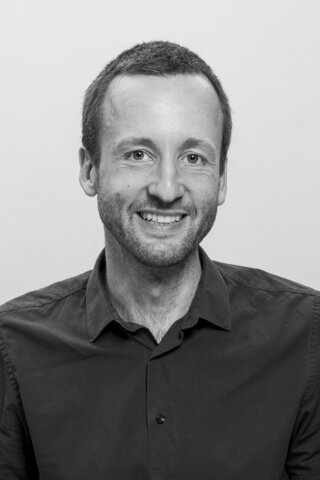
Degree programmes: Early Childhood and Primary Education – Felbi (BA), Educational Sciences – BiWi (MA).
Year of graduation: 2024
What did you do after graduating? What are you doing now?
After completing my Bachelor’s degree, I worked in the nursery cover team at Postillion e.V. I then decided to use the time leading up to my Master’s degree (half a year) to gain even more practical experience, so I undertook various work placements: A research placement in the Department of Developmental and Biological Psychology at the Institute of Psychology, University of Heidelberg; at the Mother-and-Child Centre in Heppenheim; and with the Early Intervention Services of the City of Mannheim.
During my Master’s degree, I completed a one-year further training course in developmental psychological counselling for parents with infants and toddlers at the Institute for Childhood and Development in Ulm. I also held two positions as a research assistant at the Institute of Psychology at Heidelberg University and at the Institute of Psychology at the Heidelberg University of Education.
Since graduating, I have been engaged in various professional roles, as I am interested in a wide range of subjects and fields. On the one hand, I work part-time as a specialist adviser in the ‘School & Leisure’ programme area at the Academy for Innovative Education and Management (AIM) in Heilbronn. I also hold a teaching post on the BiWi Master’s programme at the Heidelberg University of Education (seminar PM1 – B3). On the other hand, I am involved in various research projects, such as the ‘Map of Language Education and Support’ project and the Lesedrachen-III study conducted by the State Institute for Early Childhood Education and Media Literacy. To further my own professional development and, above all, to develop even greater expertise in the field of counselling, I began the further training programme in Systemic Counselling and Therapy at the Helm Stierlin Institute in Heidelberg in September 2024.
What do you like to look back on?
The people I had the pleasure of getting to know whilst at university. The time we spent together, the exchanges we had and the many moments we shared, both during our studies and in our private lives. Through my degree, I was able to forge some wonderful friendships, and I’m very grateful for them.
What advice would you give to students?
I’d particularly like to encourage BiWi Master’s students to pursue your own interests. For example, if you come across a job advert that you find exciting and think might suit you, but your exact qualifications aren’t listed, apply anyway and be brave! There are plenty of opportunities open to you with this degree.
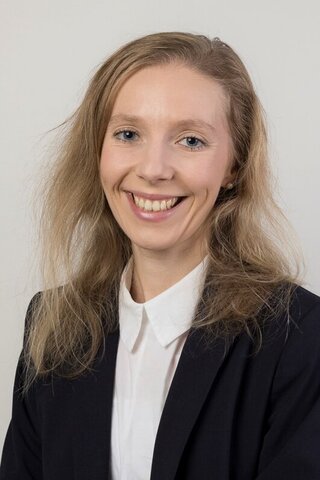
Degree programmes: BA in Prevention and Health Promotion, Heidelberg University of Education; MSc in Health Education and Promotion, Maastricht University (2023)
Year of graduation: 2021
What did you do after graduating? What are you doing now?
Since autumn 2023, I have been working at the German Alliance on Climate Change and Health (KLUG e.V.). We are committed to integrating planetary health – that is, the interconnection between health, climate and the environment – into health policy frameworks as well as into various contexts of prevention and health promotion. My responsibilities include, amongst other things, the development and implementation of target-group-specific communication strategies, information materials, workshops and training programmes based on the approach of transformative education.
What I particularly value is that I can work in a way that is guided by purpose and values, pursue my interests and, together with others, work to shape conditions in such a way that healthy behaviour – as well as behaviour that protects the climate and the environment – can be promoted.
What do you like to look back on?
After leaving school, I had a clear career goal: to help people stay healthy – not just once they’re already ill. That’s why I chose to study Prevention and Health Promotion. I’d already been interested in sustainability before I started my degree. It was only during my studies that I really became aware of the link between climate, the environment and health. A real ‘aha’ moment was the seminar on ‘stealth interventions’ in the first semester. These are measures that, at first glance, do not appear to be health promotion but can have a major impact. Today, I understand this to mean: measures with co-benefit potential that are beneficial for health, the climate and the environment.
I was able to pursue my interests in a targeted way through my coursework and final dissertation. I found the theories of health psychology, the examination of the determinants of health and intervention mapping particularly valuable. To this day, I still enjoy looking through my old notes, as they contain so many fundamental principles and potential applications.
My empirical Bachelor’s thesis presented a challenge: conducting interviews, analysing data, filtering and discussing results, whilst ensuring I didn’t lose sight of the research objective. Looking back, I’m very grateful that I was able to gain this experience at such an early stage.
What my degree has particularly equipped me with is the ability to make connections and link academic and societal perspectives. The interdisciplinary topic of Planetary Health is ideally suited to this. When I was a student, Planetary Health wasn’t yet explicitly included in the module handbook. So I’m all the more pleased that it’s being given more and more prominence today.
What advice would you give to students?
Stay open to interdisciplinary approaches. Health promotion is multifaceted. This makes perspectives from psychology, sociology, environmental science and many other disciplines all the more valuable. And above all: professional roles can be shaped. Many jobs in prevention and health promotion only come into being through the people who breathe life into them. Have the courage to forge your own path and follow your interests as you do so.
My degree in three words:
Foundation | Application | Contextual prevention
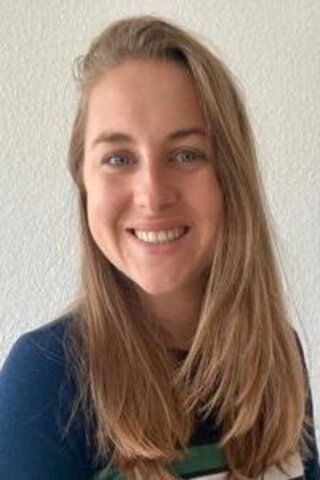
Course: Master’s in Special Educational Needs Teaching
Year of graduation: 2026
What did you do after graduating? What are you doing now?
After submitting my Master’s thesis, I spent two months travelling through Sweden and Norway. What am I doing now until I start my pre-service training in spring 2027? Just taking it easy.
What was your favourite spot at Heidelberg University of Education?
The sunny spots outside the canteen.
What do you like to look back on?
I like to think back on the diversity of the people who both study and work at the PH.
What advice would you give to students?
Enrol in seminars and take courses outside your compulsory curriculum. What’s a topic you’ve never heard of before? What draws you out of your comfort zone? What piques your curiosity?
Is there anything else you’d like to share?
The supplementary degree programme in ‘Education for the Deafblind and Hard of Hearing’ has been particularly enriching for me. Make the most of this opportunity!
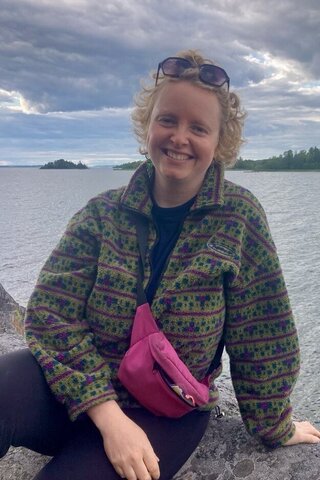
Degree programme: Special Educational Needs Teacher Training 2011
Year of graduation: 2019
What did you do after completing your degree?
After completing my degree and before starting my teaching placement, I worked at a rehabilitation centre for people with hearing impairments and taught sign language courses. I then began my teaching placement and am now working as a trainee sign language lecturer.
What advice would you give to students at Heidelberg University of Education?
Attend modules that have a strong practical component and are relevant to everyday life, such as counselling skills or practical teaching methods. I would therefore advise you to choose modules that focus on developing skills (rather than simply imparting knowledge). This is of great importance for everyday life as a teacher!
What was your favourite place at the Heidelberg University of Education?
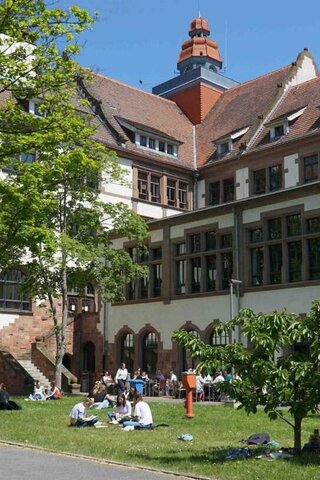
The university’s inner courtyard, because you always used to bump into people there.
Degree programme: Political Science/Geography for Secondary Level I Teacher Training
Year of graduation: 2025
What did you do after graduating? What are you doing now?
In 2021, I set up a company with my friends to launch our own beer brand, Heerlijk Heidelberg
and then, four years later, opened my own bar in Bergheim. Since then,
we’ve been selling our beers in and around Heidelberg, organising events, parties and catering services
What was your favourite place at the PH Heidelberg?
The canteen at the old PH or the new PH, as you’d always bump into a familiar face there at almost any time of day
you’d always bump into a familiar face. Even though it’s not a specific place, the
opening days were always lovely too. Especially in the first few weeks, you can
make the best connections and friendships, which, ideally, last throughout your studies
.
What do you like to look back on?
All the moments and experiences with my fellow students and friends that I
got to know during that time. The geography field trips in particular were
very memorable, both on a personal and an academic level.
What advice would you give to students?
There’s no point in driving yourself crazy over upcoming exams. Make the most of
your time at university to find out what you want, what interests you and which
path you should take. Have the confidence to make decisions, even if they might not
fit in with your original plan, but feel right.
Is there anything else you’d like to share?
Make the most of your time at university to explore your options, because later on you’ll rarely have
much freedom and so many opportunities as you have now.

Degree programmes: BA in Prevention and Health Promotion (2019); MA in Psychosocial Counselling, Protestant University of Applied Sciences Darmstadt (2025)
Year of graduation: 2019
What did you do after graduating? What are you doing now?
Since completing my Bachelor’s degree, I have been working at the Heidelberg Self-Help Office in the area of self-help support – a field I had the opportunity to get to know in depth during my placement semester. My responsibilities include advising people interested in self-help, providing guidance and support to existing self-help groups, collaboration and networking, coordinating projects, and public relations work. What I particularly value about this role is working with a variety of target groups and the varied nature of the tasks. I’m constantly impressed by the tremendous commitment of the people who are actively involved in self-help.
What do you like to look back on?
What I particularly enjoyed about the Prevention and Health Promotion degree programme was the wide range of topics and disciplines – promoting physical activity, nutrition, project management and networking, as well as community health promotion. I am able to apply much of what I learnt, particularly project management and networking, in my day-to-day professional life today. Key concepts in health promotion, such as empowerment and participation, also feature in my work every day. If I could start my degree all over again, I’d make the most of networking opportunities right from the start and do more work placements – simply to gain even more practical experience and get to know different perspectives.
What advice would you give to students?
Make the most of work placements and other practical opportunities to gain experience early on and establish your first professional contacts. Stay open to different fields of work – including those that might not seem directly related to health promotion at first glance. If you’re planning to do a Master’s degree, stay curious and open to different disciplines.
My degree in three words:
versatile | interactive | solid foundation
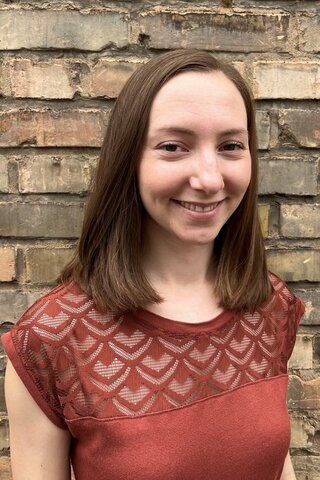
Degree programme: M.Ed. in Special Educational Needs
Year of graduation: 2025
LinkedIn profile:
What did you do after graduating? What are you doing now?
I’m currently on my teaching placement at the SBBZ Luise von Baden in Neckargemünd, where I’m gaining practical experience to further my teaching career.
What was your favourite place at Heidelberg University of Education?
The stadium at the Olympic Training Centre, which was near my sports lectures. There, I could work out to clear my head, prepare for sporting challenges, but also relax on the grass and catch up with friends over a pizza or a game of frisbee. I lived right next door in the student halls of residence, so the location was perfect!
What do you like to look back on?
The many different seminars and lectures I attended, and the discussions with the other students that came out of them. What made this degree programme particularly special for me was that we all looked beyond our own horizons (academically, it’s very broad due to the structure of the programme) and were able to learn in a very varied way. I found Disability Studies really fascinating, and it always gave me a sense of validation when we’d discuss it with friends by the Neckar in the evenings. Our interest went beyond the ‘compulsory curriculum’.
What advice would you give to students?
Get involved in your studies in a way that suits you! Whether that’s joining the PH band or running a tutorial. Discover your profession and find what energises you. It’s precisely these activities outside your core studies that are incredibly important for your future teaching. What we do shapes our future teaching and what we want to pass on to children and young people.
Is there anything else you’d like to share?
Talk to the other students. Especially in your future career, cooperation is
is absolutely vital, and everything is more enjoyable when you prepare for life as a teacher together with friends and
fellow students ;)
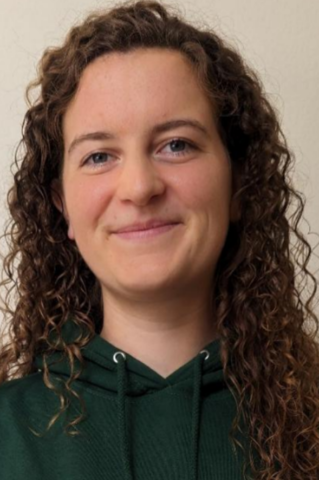
Degree programmes: BA in Public Management (2021); MA in Local Health Promotion
Year of graduation: 2025
What did you do after graduating? What do you do now?
Since mid-June 2025, I have been working as a self-help counsellor at the Self-Help Groups Liaison Office within the Health Promotion and Planning Division of the Böblingen District Health Authority – initially as a working student, and now full-time. I’d already got to know the lovely team through a voluntary placement during the summer break. Through my previous job as a human resources administrator at the Rems-Murr District Office, telephone conversations with self-help contact points for a term paper on self-help, and freelance work as part of a project for the self-help contact point in Waiblingen, I already had an idea of what to expect.
My day-to-day work at the contact centre involves researching and referring self-help groups and professional support services to those affected and their families. We advise people who wish to get involved in self-help on finding like-minded individuals and setting up a new group. My day-to-day work also involves planning, organising and running events to facilitate networking and professional development for those active in self-help, as well as supporting existing groups. In addition, we network with other (supra-)regional stakeholders within our support system and raise public awareness of community-based self-help.
What I like about my work is that, on the one hand, I am in direct contact with (committed) people and, on the other, I can help shape the Self-Help Support Centre as a traditional institution for health promotion. I like knowing that self-help support contributes to promoting tolerance, diversity and voluntary work – and thus, on a small scale, strengthens social cohesion and our democracy. At work, I can be myself, contribute and build on my strengths, and strike a good balance between my private and professional lives – things that were particularly important to me during my career change, alongside a genuine interest in the work itself and the freedom to work independently.
What do you like to look back on?
Although I initially began my degree mainly because I wanted a recognised excuse in our working world to undertake two years of taster placements for career guidance, and to be able to present a degree in health sciences in our ‘land of paperwork’ as quickly as possible, so that I could enter the professional field in which I wanted to work, I have to say that I actually gained much more from my studies than I’d initially thought: As well as all the course content I’ve absorbed – ranging from intervention planning and evaluation, through health and network communication, to approaches to policy advice – my perspective on health promotion has shifted from an individual focus to one that encompasses society as a whole. Furthermore, returning to student life has enabled me to forge links with wonderful people who are doing valuable work for our public health and our community. Moreover, the course and the lecturers have supported me in reflecting on and defining my own professional role. I am very grateful that I had the courage to take this step and that I was given the opportunity to do so.
What advice would you give to students?
If you want to use the Master’s programme for career guidance and to gain practical experience, I believe it’s well worth the effort to try out various voluntary placements, work shadowing, voluntary activities and part-time or student assistant roles – regardless of the fact that you can already refine your own profile and explore what suits you best by choosing the topics for your assignments or your transfer project. However, for the sake of your own peace of mind, it might also make sense to allow yourself an extra semester beyond the standard duration of study, provided that fits in with your own plans and circumstances.
My degree in three words:
interactive | life-shaping | meaningful
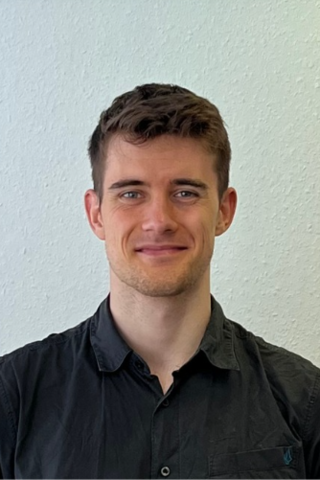
Degree programme: Special Educational Needs | Specialisations: Learning & Language
Year of graduation: 1998.
What did you do after graduating? What do you do now?
I completed my teaching training and then worked full-time in the school system for almost 10 years. First in Hesse, then in Baden-Württemberg (in Mannheim). When the opportunity arose, I moved to the Ministry of Social Affairs on a part-time secondment. There, I worked for a foundation specialising in health prevention, but at some point realised that administration alone wasn’t really my thing. And then the opportunity arose to move to the Heidelberg University of Education. First on secondment and then in a permanent role. And I’m still there because I simply enjoy it so much!
What was your favourite place at Heidelberg University of Education?
The café that used to be in the old building opposite the canteen, and of course the courtyard in the old building.
What do you like to look back on?
The time spent with my fellow students and the discussions we had.
What advice would you give to students?
Stay critical! Ask questions, get involved in discussions, and don’t just accept everything at face value.
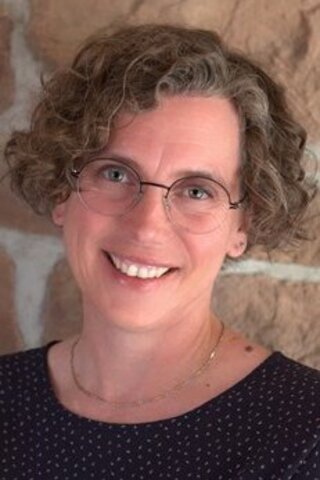
Course of study: WHRPO 2011, specialising in Music, German and Ethics, and a PhD
Year of graduation: 2016 (teaching qualification) and 2021 (PhD)
What did you do after completing your studies?
Following my teacher training, I initially completed my PhD in the Research Training Group ‘Effective Competence Assessment in Teacher Education’. I also undertook my pre-service teaching placement at the Geschwister-Scholl-Schule in Heidelberg (a comprehensive school) and at the Seminar Mannheim. Since August 2021, I have been working as a research assistant at the University of Teacher Education St. Gallen in Switzerland.
What was your favourite place at the Heidelberg University of Teacher Education?
Without a doubt: the canteen in the old building – I spent almost all my breaks there, chatting with my fellow students. Another favourite spot, however, was the practice rooms on the top floor of the old building. As a music student, these were invaluable to me.
What do you look back on fondly?
The numerous in-depth discussions in various seminars, getting a taste of different research environments through my student assistant jobs, the concerts by the PH Big Band, the rock nights organised by the music students’ association…
What advice would you give to students at Heidelberg University of Education?
Make the most of your valuable time at the PH and: enjoy being critical.
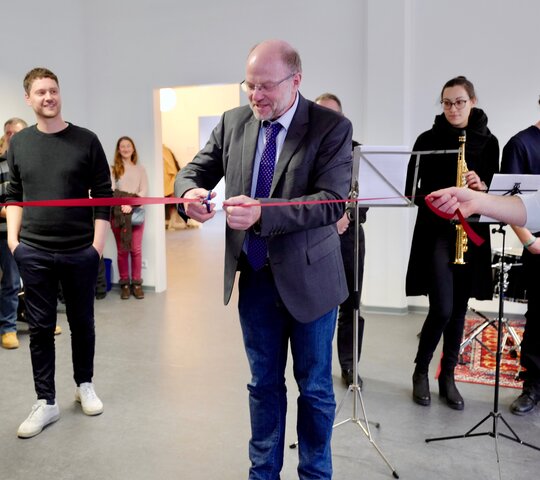
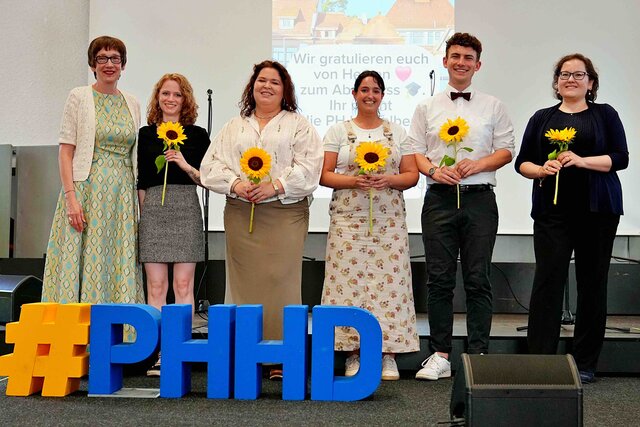
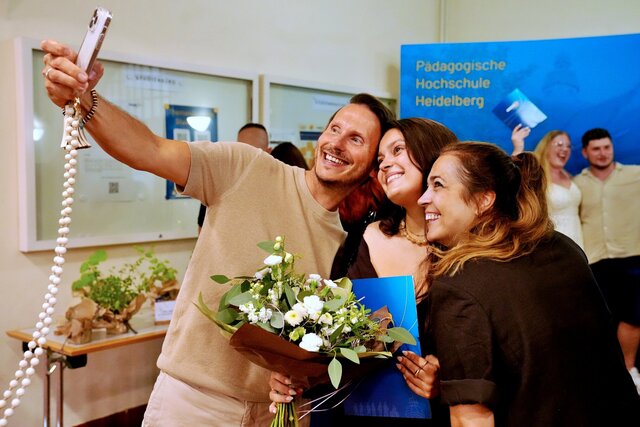
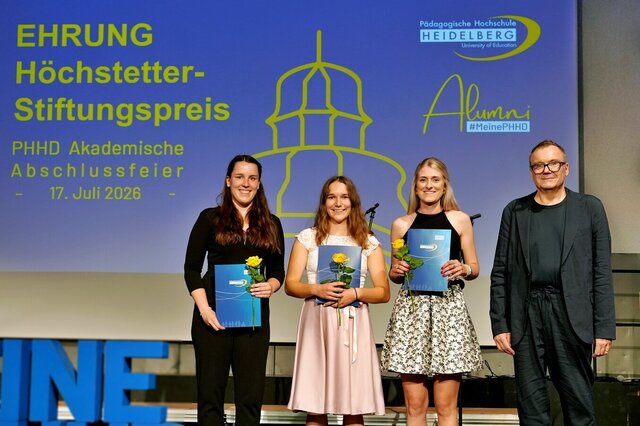
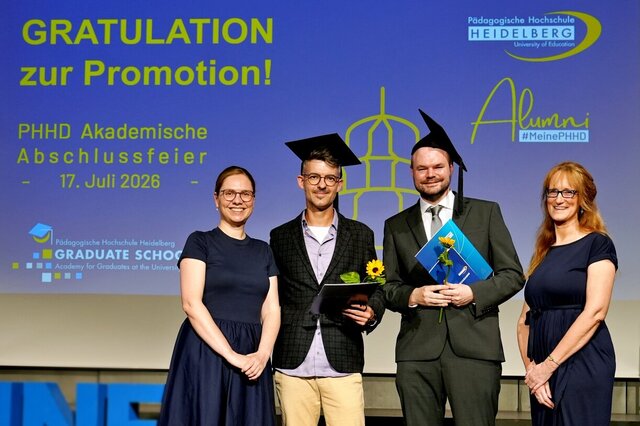
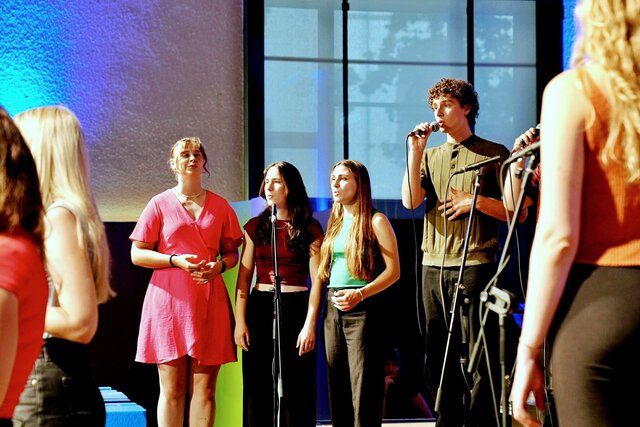
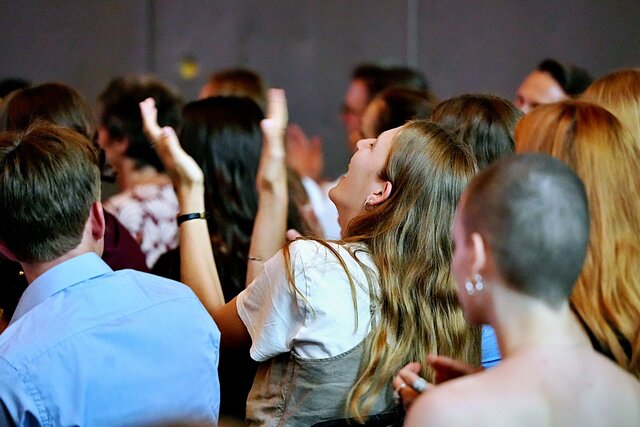
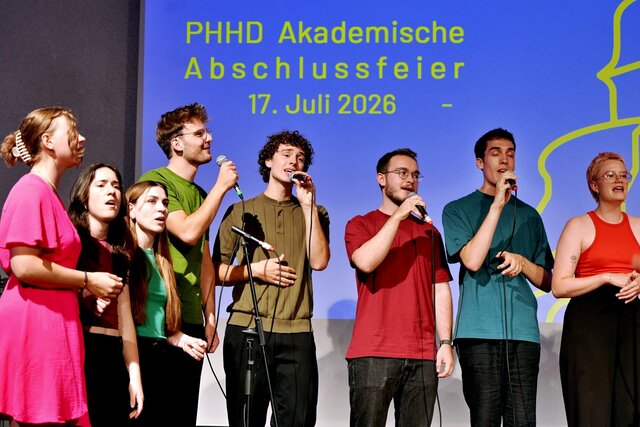
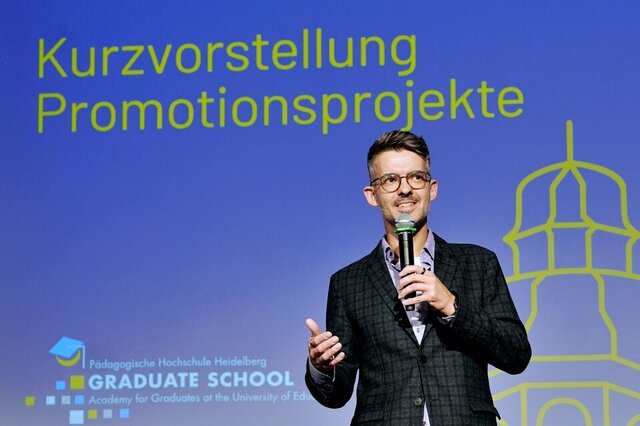
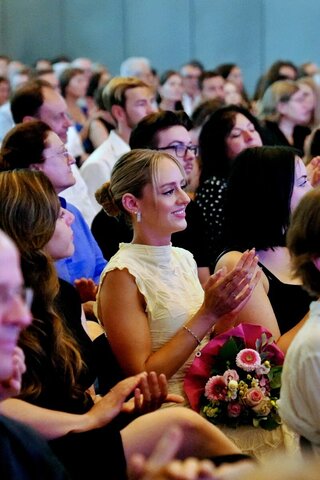
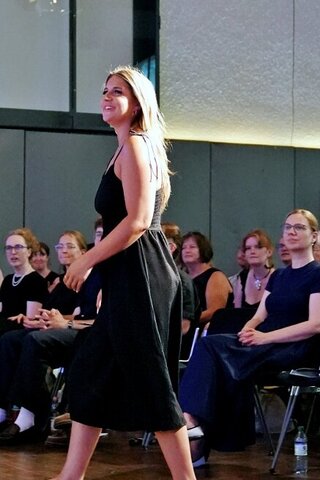
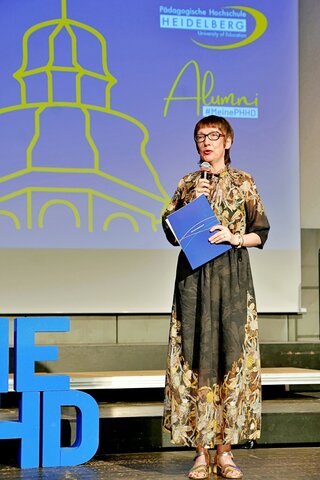
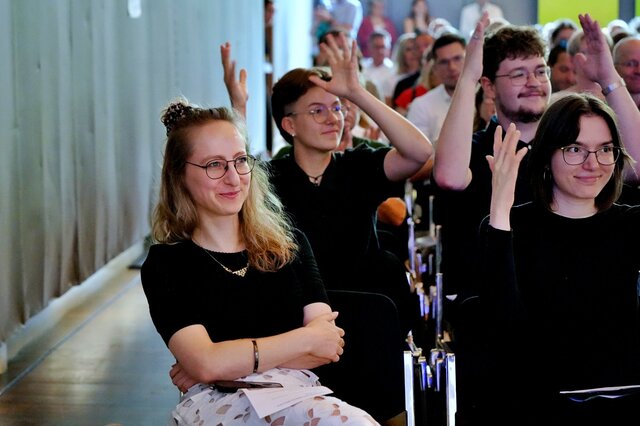
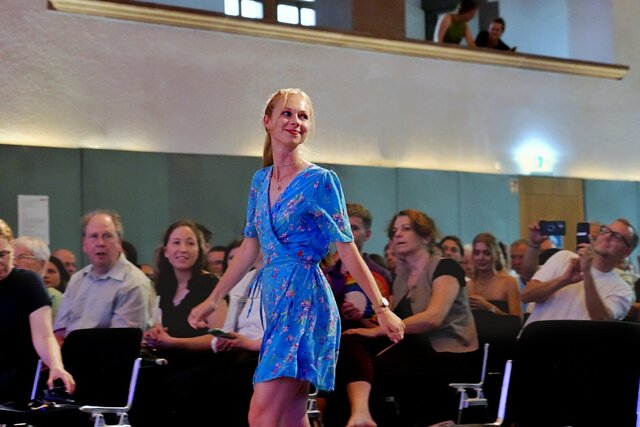
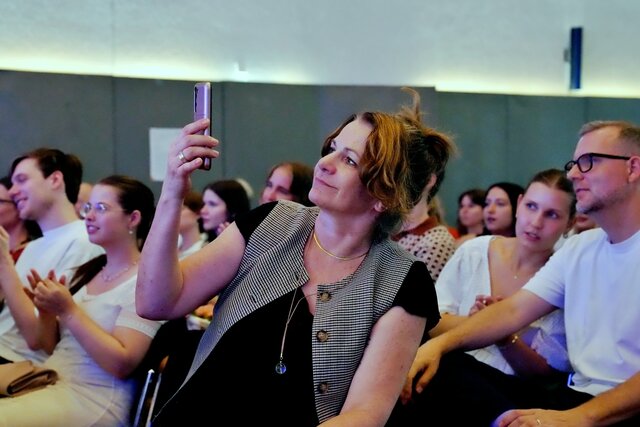
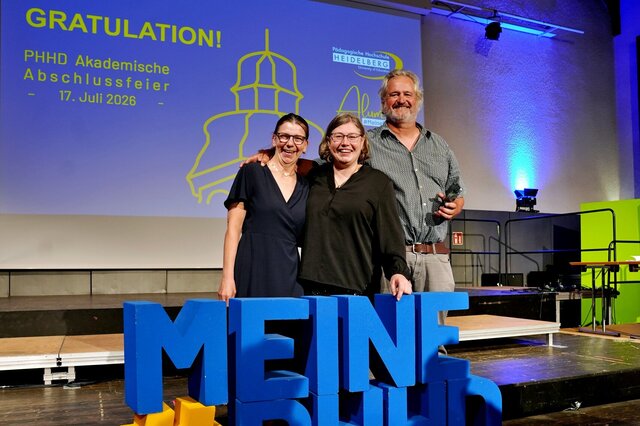
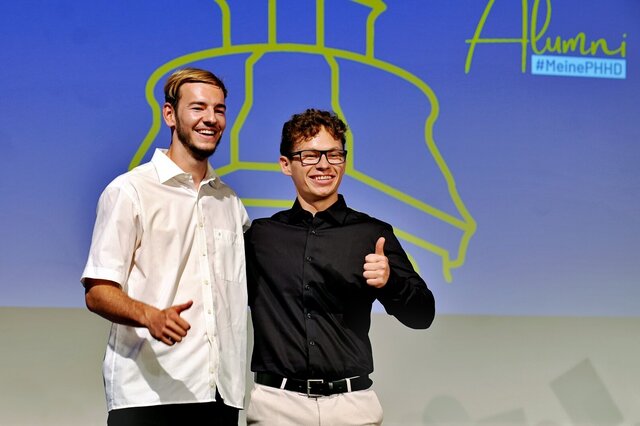
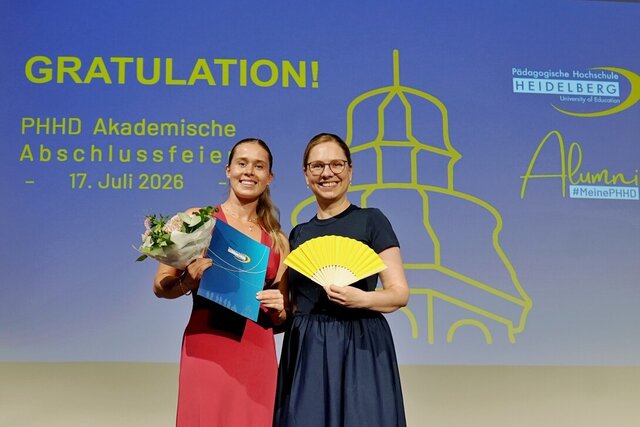
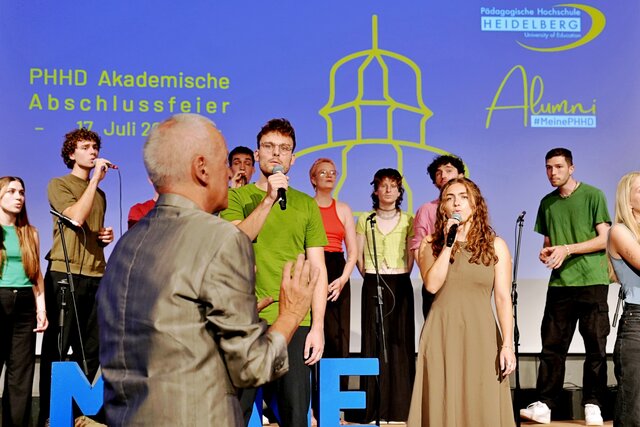
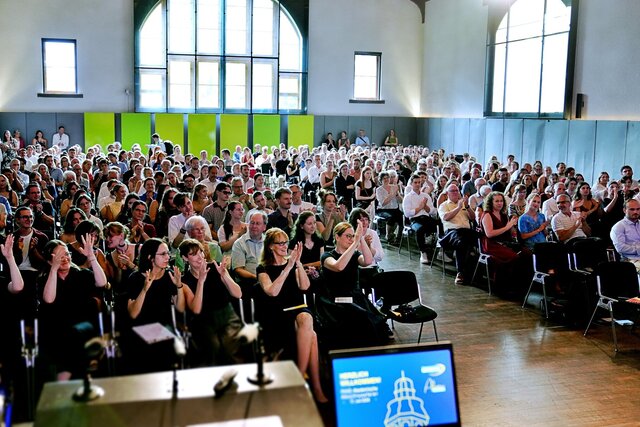
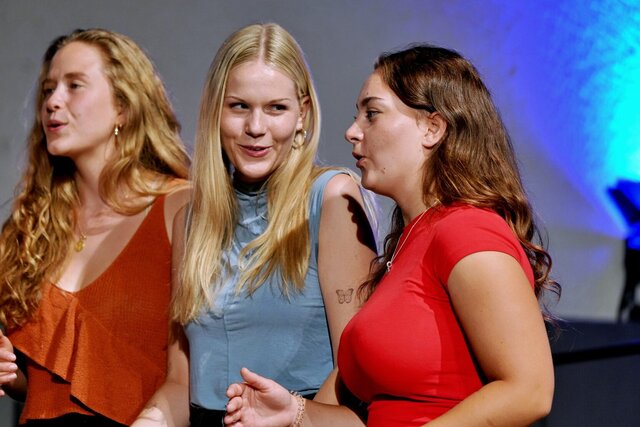
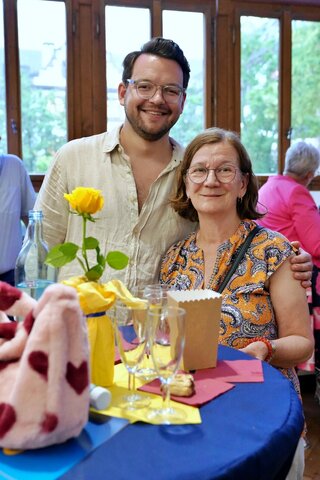
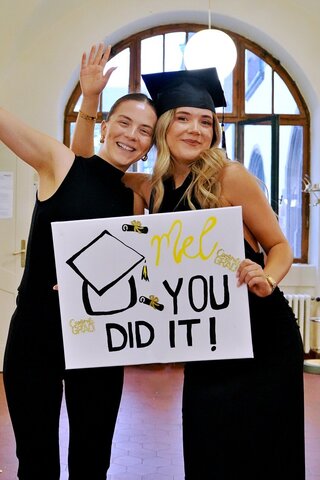
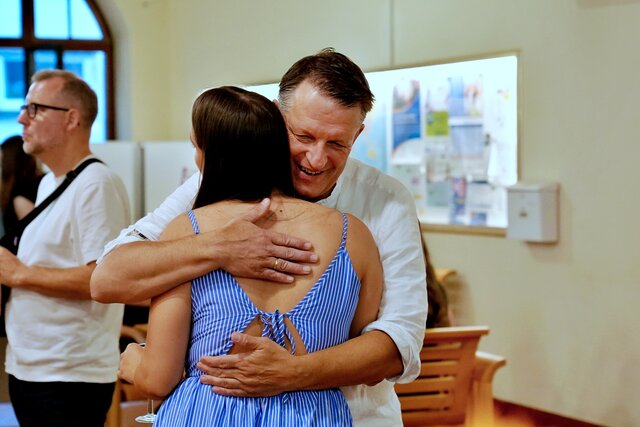
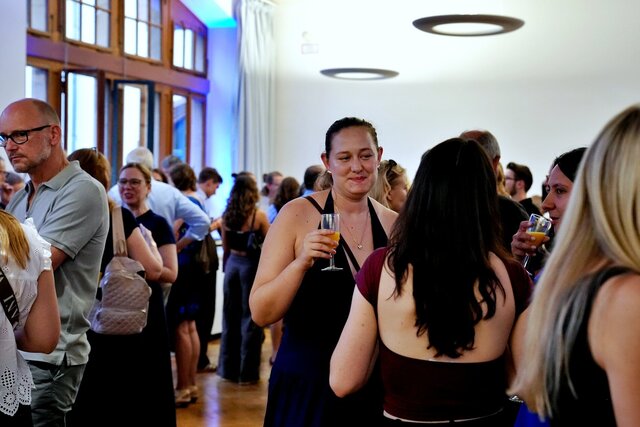
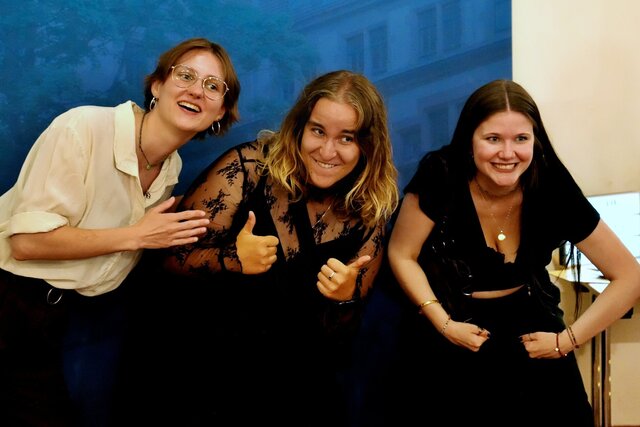
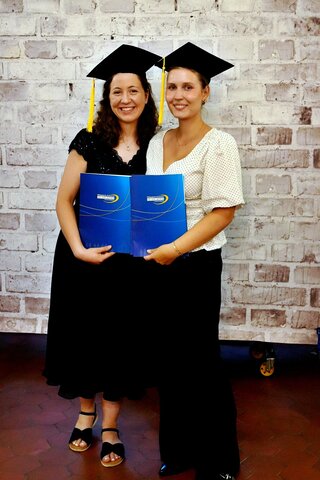
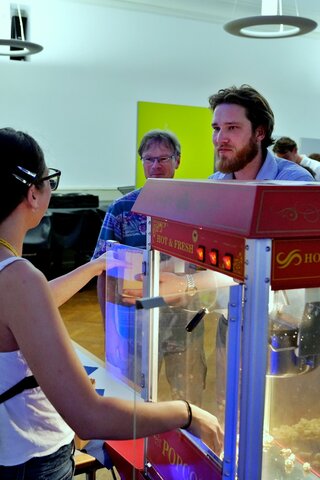
Graduation ceremony, 17 July 2026 – you can find the (group) photos from the official part here:
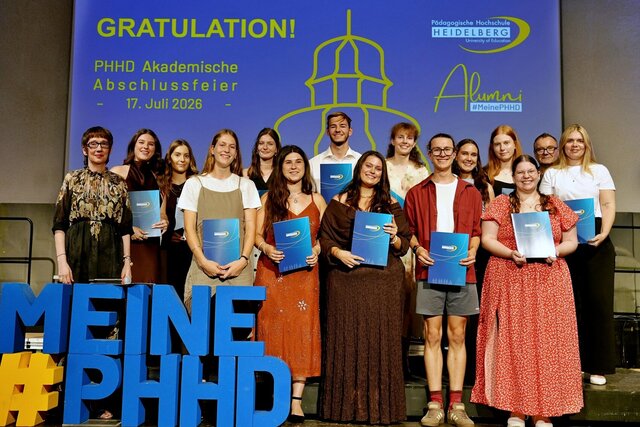
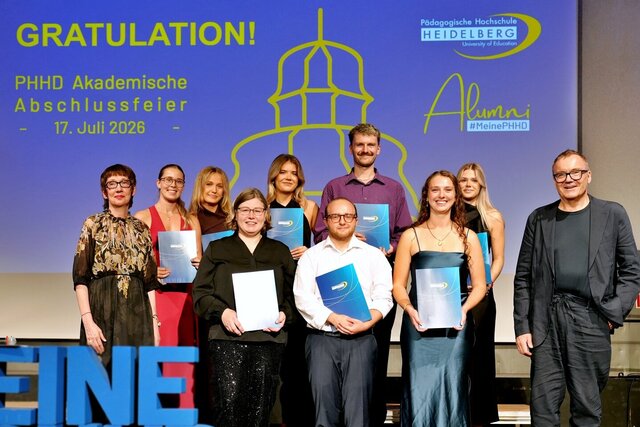
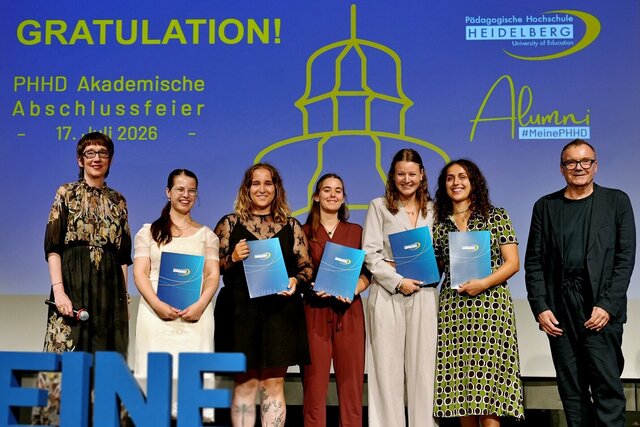
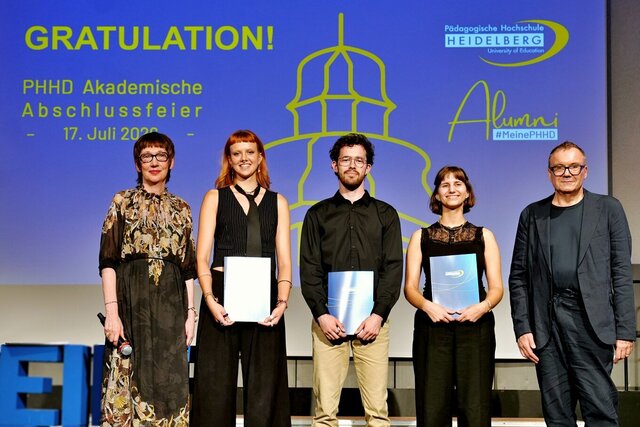
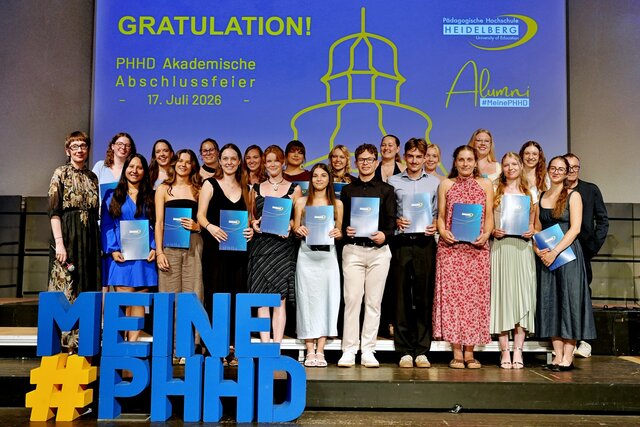
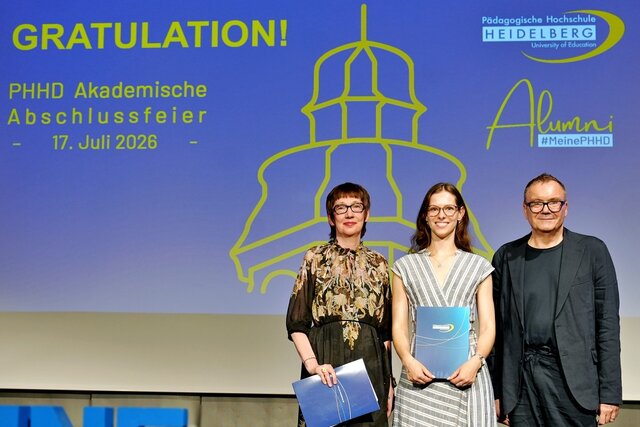
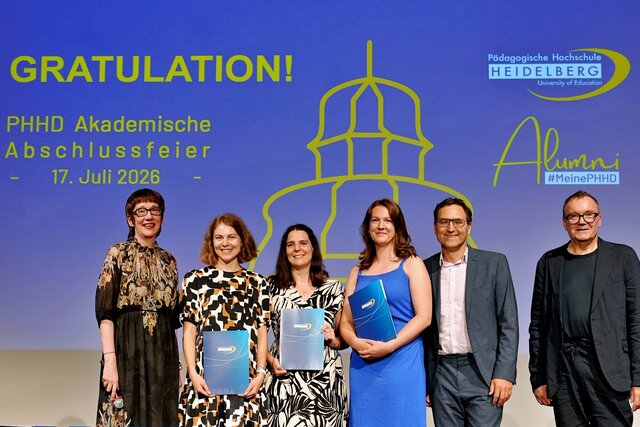
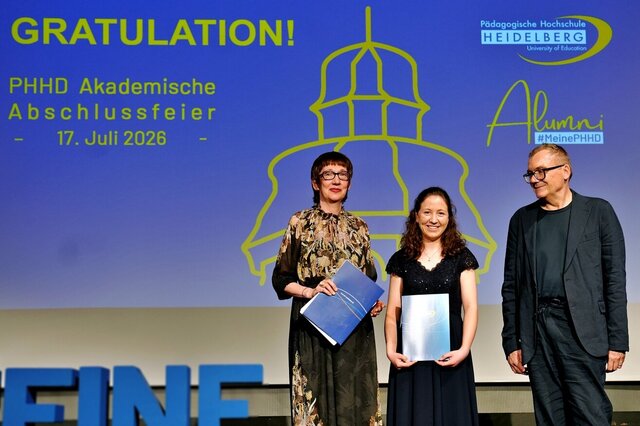
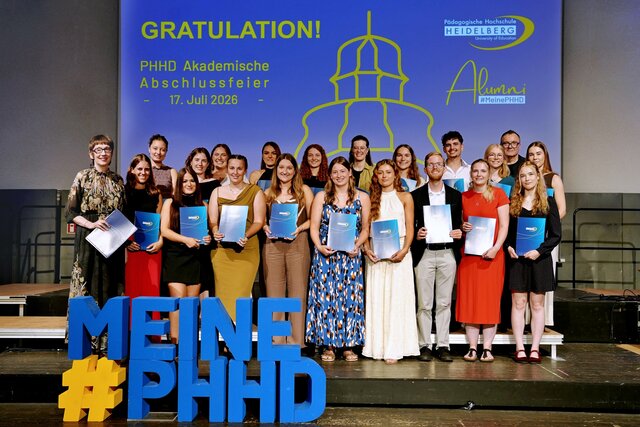
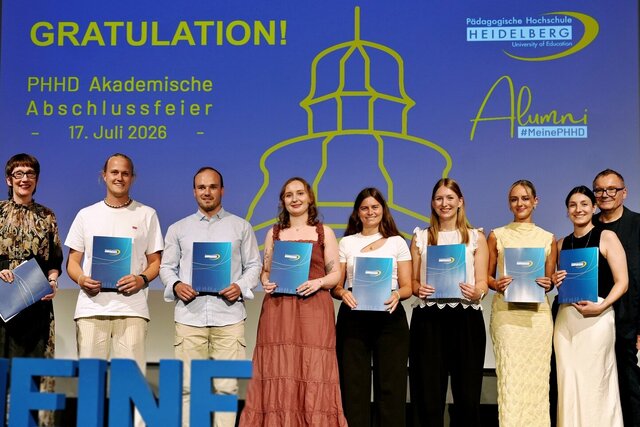
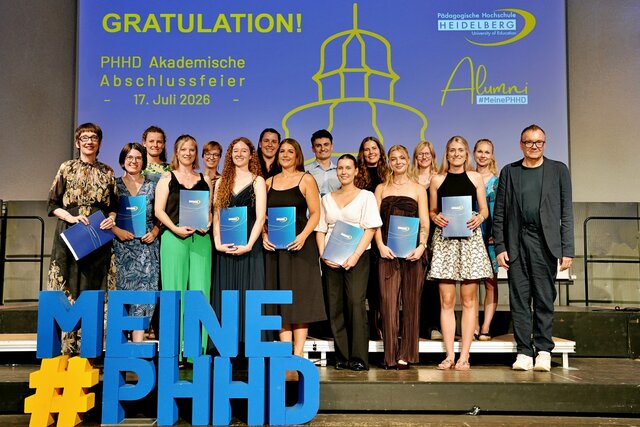
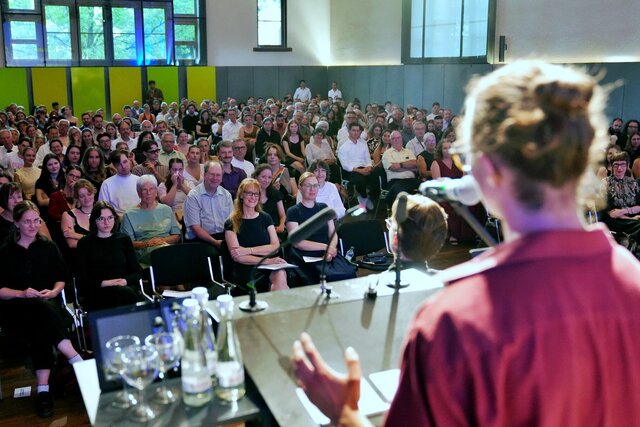
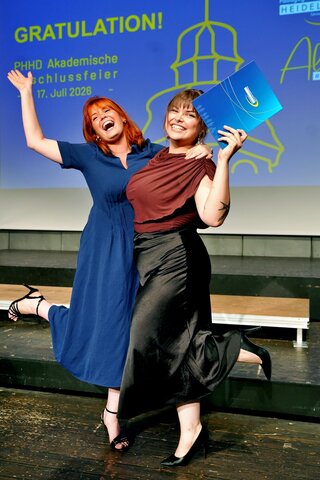
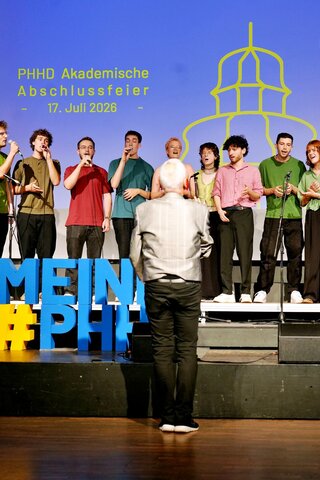
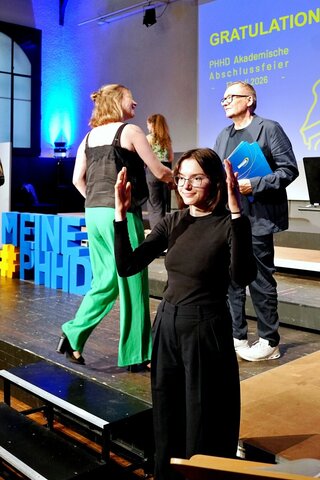
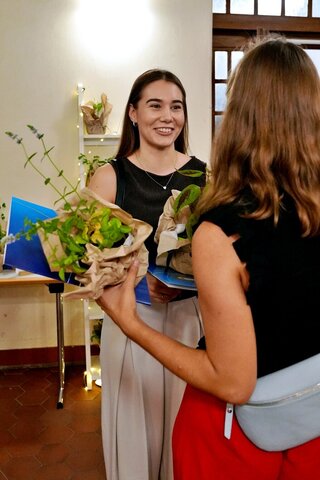


regarding membership of the Heidelberg University of Education’s alumni programme, in accordance with the duty to provide information under Article 13 of the GDPR.
We take the protection of your personal data very seriously. We want you to know when we collect what data and how we use it. As we continue to develop our website and implement new technologies, changes to this privacy policy may be necessary. We therefore recommend that you review this privacy policy from time to time.
This privacy policy explains the nature, scope and purpose of the processing of personal data within the alumni programme of the Heidelberg University of Education (hereinafter referred to as “PHHD”). The university’s general privacy policy can be found at
With regard to the terms used, such as ‘personal data’ or its ‘processing’, we refer to the definitions in Article 4 of the General Data Protection Regulation (GDPR).
The data controller for the purposes of data protection law is:
Heidelberg University of Education
Keplerstr. 87
D-69120 Heidelberg
+49 6221 477-0
Email:
The Heidelberg University of Education is a public-law body. It is legally represented by the Rector, Prof. Dr Karin Vach. Responsibility for running the alumni programme lies with the management of the Transfer Centre and the Alumni Manager at the PHHD.
VAT registration number: DE 811226356
The PHHD’s alumni programme is a networking, service and information platform for all students, alumni and former staff. This includes
- sending a digital newsletter containing information about the alumni programme and other news from the university using the external tool ‘Rapidmail’ – rapidmail GmbH,
- personalised communication via email, including for marketing purposes, such as requests for testimonials, blog posts or for the “Alumni Talk” section on Instagram,
- invitations to PHHD events via the newsletter and subject-specific mailing lists,
- Invitations to (annual) meetings of the alumni programme.
For this purpose, it is essential that we collect the following personal data from you:
- Surname and, where applicable, surname upon graduation
- First name
- Gender
- Date of birth
- Town
- Country
- Email address
- Year of graduation
- Qualification
- Course of study, field of study or subjects
The following data is also collected on a voluntary basis:
- Street, house number and postcode
- Link to LinkedIn profile
- Career history, comprising: job title, company, department, type of employer, sector, type of employment, field of work, company size, start date, end date, description
- Question: “How did you find out about the alumni network?”
- Question: “Why would you like to join the alumni network?”
To verify the accuracy of the information provided in the context of determining eligibility to participate in the PHHD alumni programme, a cross-check is carried out against data on students stored for other purposes (e.g. student administration). Following the student’s departure, this also extends to data that is still lawfully retained and, where applicable, restricted. The comparison is limited to the mandatory information required for participation in the alumni programme.
As part of the alumni programme, we provide you with electronic information in the form of a newsletter. You receive this information on the basis of the consent you have given us. These newsletters contain, amongst other things, information about continuing professional development programmes as well as invitations to alumni networking events and public events organised by the PHHD. In addition, information specific to your degree programme or field of study, as well as invitations to events, are also sent out.
Only your email address is used to send the newsletter. The newsletter is sent using the external tool ‘Rapidmail’ – rapidmail GmbH.
In order to optimise the alumni programme and tailor offers to the target group, the data provided is analysed. The data is analysed anonymously and relates to the following information:
- Degree programme, field of study or subjects
- Year of graduation
- Age
- Place of residence
The legal basis for the collection and processing of your personal data for the purposes stated is Article 6(1)(a) of the GDPR (consent).
We will process your data until your alumni membership ends or until you object to this processing. Your data will be deleted upon receipt of a written notice of withdrawal sent to
You may withdraw your consent to receive the newsletter at any time, regardless of your alumni membership, by unsubscribing from the newsletter.
Your data is processed by the PHHD Transfer Centre for the purpose of registering you for the alumni programme and sending the newsletter.
In addition, the PHHD Student Office receives your data to verify that you have in fact studied at the PHHD. Once verification is complete, the data held by the Student Office will be deleted. The data will remain in the alumni database. Unless it can be proven that the person is a former PHHD student, all data will also be deleted from the alumni programme database.
You have the following rights:
- Access to your personal data, in accordance with Article 15 of the GDPR
- Rectification of your data, in accordance with Article 16 of the GDPR
- Erasure or restriction of data processing, in accordance with Articles 17 and 18 of the GDPR
- Objection to data processing, in accordance with Article 21 of the GDPR and Section 12(1) of the LHG