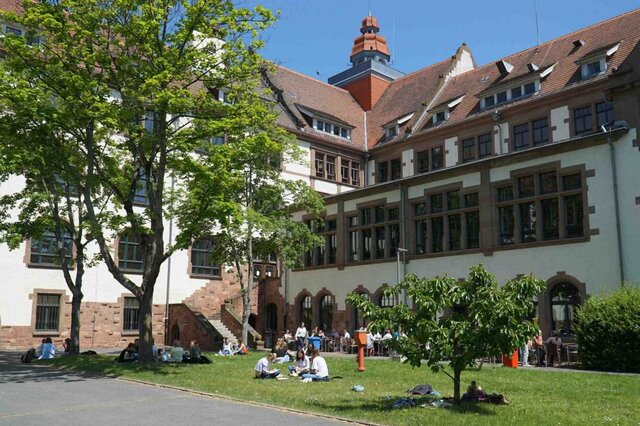
Philosophy is part of our everyday lives: it features in the questions we ask ourselves when it comes to justice, responsibility or living together harmoniously. These questions help us to reflect on our viewpoints, think critically and find our bearings in a complex world. Those who understand philosophy learn to view the world in a nuanced way – and that is precisely what you will pass on to your pupils later on in the classroom.
On the Philosophy/Ethics teacher training programme, you will learn how to encourage young people to reflect on values, norms and fundamental questions about what it means to be human. You will learn to facilitate discussions, analyse arguments and develop methods that bring philosophical inquiry and ethical judgement to life. Reading and discussing classical and contemporary texts forms the basis for this.
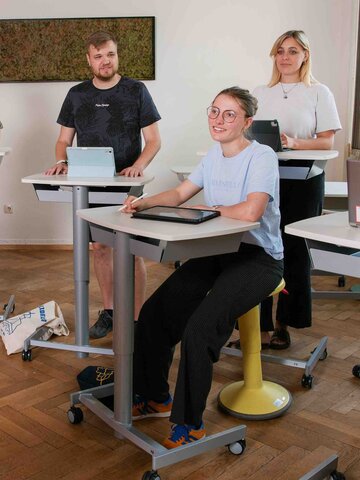
The subject of Philosophy/Ethics explores fundamental questions concerning human thought and action – questions that are just as significant for young people as they are for society as a whole.
The lessons create an open space for thought, in which pupils learn to reflect, argue and understand different perspectives.
As a teacher, you will create challenging yet enriching learning environments in which young people explore philosophical questions and seek guidance together – with curiosity, respect and critical thinking.
Philosophy isn’t just taught within the university. You can also engage with philosophical questions in a practical way outside the lecture theatre. In projects such as ‘Public Philosophy’ – a collaborative project run by the university – you can engage in philosophical discussions with members of the public through various activities, for example in schools, at public events or in the pedestrianised area.