The start of an academic career at Heidelberg University of Education is supported by a wide range of support and professional development programmes. Early-career academics will find ideal conditions here to develop their skills in research, teaching and academic self-governance, and to build a network of contacts. The aim is to help them build an independent academic career and to provide them with long-term support for their professional and personal development. The University sees itself as a reliable partner on the path to a successful academic future.
A PhD programme offers the opportunity to engage in-depth with a research topic of one’s own choosing and to make an original contribution to academic discourse. It strengthens analytical thinking, deepens methodological skills and fosters the development of an academic profile. At Heidelberg University of Education, PhD candidates benefit in particular from close links to educational and school contexts, as well as from a strong practical focus. Interdisciplinary exchange, individual supervision and structured training programmes create ideal conditions for a successful PhD programme. In addition, a wide range of career prospects opens up – both within academia and at the interfaces between education, research and practice.
The Heidelberg University of Education’s
- to register as a doctoral candidate at Heidelberg University of Education and
- thereby to apply for admission as a doctoral candidate at a faculty of Heidelberg University of Education, and consequently
- initiate the doctoral programme at your faculty.
- to check the status of your doctoral programme and to apply for changes, such as a change of supervisor or an extension to your doctoral programme duration.
- to ensure that doctoral candidates fulfil their duty to provide information in accordance with the Higher Education Data Protection Regulation.
- to apply for membership of the Graduate School and thereby gain access to all services for young researchers.
You will need to take the initiative yourself when looking for a supervisor. Find out about potential supervisors via the University of Education’s website and those of the individual faculties, and contact them by email.
Important: Avoid sending generic emails. Show that you have familiarised yourself with the specific research interests of potential supervisors. Attach a brief CV and your ideas for your doctoral project to your email.
If you need help finding a supervisor, please feel free to contact the Graduate School.
The habilitation process at a University of Education offers researchers who have already obtained a doctorate the opportunity to further develop their academic independence and demonstrate their teaching competence. It combines the development of a research-based profile with qualifications in higher education pedagogy within an environment shaped by educational science. The close integration of theory, empirical research and practice opens up a wide range of opportunities for an academic career in the fields of educational research and teacher training. The University of Education provides a supportive environment for this, offering targeted support, collegial exchange and individual guidance.
Starting a habilitation requires careful planning and close coordination with the university. As a rule, the initial stages involve the following steps:
- Development of an independent research project with a focus on educational science or subject-specific didactics
- Establishing contact at an early stage with a supervisor at the university who is authorised to supervise habilitation procedures
- Reviewing the habilitation regulations to clarify requirements and procedures
- Submission of a formal application for acceptance as a habilitation candidate to the relevant faculty (including an outline of the written habilitation thesis, a CV, and an overview of publications and teaching activities)
- Clarification of the general conditions: e.g. teaching commitments, links to research structures, funding and professional development opportunities
The points of contact for handling the formal procedures involved in the habilitation process are, respectively:
Faculty of Education and Social Sciences
Contact: Faculty I Secretariat, Ms Schäfer,
Faculty of Cultural and Humanities Studies
Contact: Faculty II Secretariat, Ms Gennrich,
Faculty of Natural and Social Sciences
Contact: Faculty III Secretariat, Ms Mehr,
A junior professorship at the University of Education is a fixed-term professorship designed to facilitate early academic development following a PhD. It enables independent research and teaching, particularly inteacher training and educational research. Junior professorsare responsible for teaching, supervising dissertations and further developing their field of specialism. The post is usually for a term of six years and serves as preparation for a full professorship. As such, the junior professorship represents a key qualification pathway for an academic career at universities. In addition to junior professorships (with or without) tenure track, there remains the option of obtaining a habilitation and being appointed to a tenured professorship.
Early-career academics have access to a comprehensive staff development programme, which the Heidelberg University of Education has successfully established. This programme offers, in particular, individual mentoring and coaching services, as well as opportunities for further training and support.
-
23/2022 | Änderungssatzung Evaluation Juniorprofessur - Lesefassung (109 KB, PDF) -
06/2025 | Berufungsrichtlinie- und Auswahlverfahren (369 KB, PDF) -
03a/2025 | Qualitätssicherung Tenure Track Professuren 5. Änderungssatzung Lesefassung (129 KB, PDF) -
43/2018 | Verlängerung Beamtenverhältnisse (300 KB, PDF)
A career path as a teacher on secondment to undertake a PhD at a university of education offers the opportunity to combine academic work with practical experience in schools. As part of a secondment, teachers are given the time to systematically pursue their own research project and develop it further within an academic environment. The close links with the university enable both methodological training and high-level academic supervision. This fosters a fruitful exchange between school practice and research – offering prospects for individual career development and the advancement of education as a whole.
A career path as a junior research group leader at the University of Education offers researchers who have completed their doctorates the opportunity to lead their own research projects and a team independently at an early stage. In doing so, they develop an independent research profile, strengthen their leadership skills and gain extensive experience in securing external funding and managing projects. The close links to issues in educational science, as well as collaboration with school and non-school settings, create a research-oriented, practice-based environment. This career path is an important milestone on the route to a professorship or to senior positions in academic institutions.
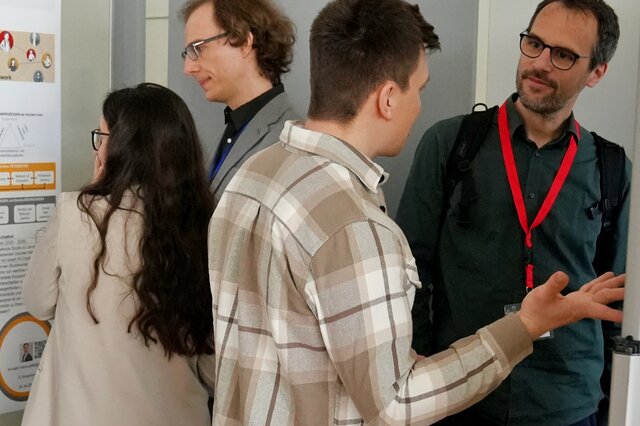
The Graduate School is an interdisciplinary doctoral programme designed to support the personal and professional development of early-career researchers. Its aim is to provide systematic support to doctoral candidates throughout their career paths and to prepare them for the demands of an ever-changing world of work and research. Through a structured programme of training, interdisciplinary exchange and targeted support initiatives, it contributes to the development of academic, methodological and interdisciplinary skills.
Members of a Research Training Group are automatically part of the Graduate School. Membership is also open to all doctoral candidates on a voluntary basis.
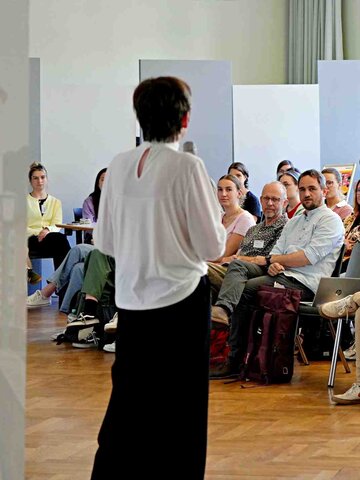
A Research Training Group is a structured PhD programme that offers doctoral candidates a sound academic and methodological grounding in a specific field of research. It combines individual research projects with a supporting curriculum, promotes interdisciplinary exchange and provides a supportive environment through supervisory teams, peer networking and regular events.

Heidelberg is the ideal place to pursue a career in research and education. It is home to renowned research institutions, and academic life here is thriving. Education and innovation are also high on the agenda in the Rhine-Neckar metropolitan region. Discover Heidelberg’s potential for your academic future.